
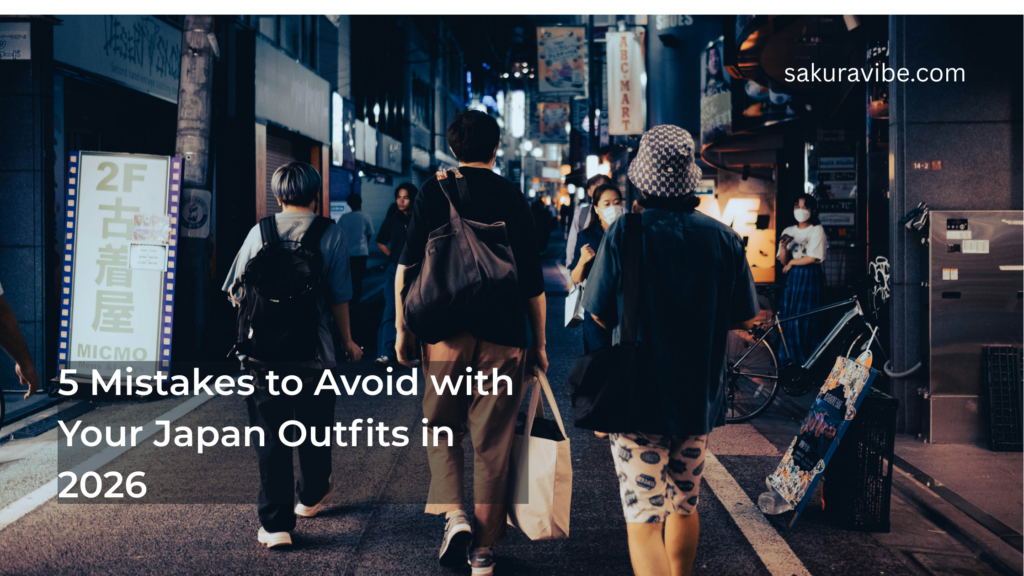
We’ve all been there. You’re scrolling through your feed, and you see that perfect Japanese street-style look—maybe it’s those effortlessly baggy trousers or a perfectly layered kimono-style jacket. It looks so cool, so intentional. You hit “buy,” wait for the package, put it on, and… it just doesn’t look right. In fact, it might look kind of bad compared to the vision in your head.
I’ll be the first to admit it: I’ve been there too. I’ve tried to mimic those exact photos and bought stuff without really having the full knowledge of how the style works.
If you’ve felt that frustration, don’t worry. It’s not you—it’s usually just a few common mistakes. Here is how to move past the “social media mirage” and actually nail the look in 2026.
This post contains affiliate links, meaning I may make a commission at no extra cost to you if you decide to click on a link and purchase something.
Table of Contents
ToggleStop Chasing the "Social Media Mirage"
The biggest mistake we make is forgetting that social media isn’t reality. Those photos are captured with professional lighting, specific camera angles, and often, the clothes are pinned behind the model’s back to sit perfectly.
When we try these outfits for the first time and they don’t look like the screen, we feel like we failed. But a photo is a static moment; a real outfit has to move with you. Instead of trying to copy a picture piece-for-piece, try to capture the mood.
Is it the earthy colors? The mix of textures? Focus on that instead of trying to be a carbon copy of a filtered image.
Respect Your Own Proportions
This is a hard truth to swallow: body size and shape matter. A lot of Japanese fashion relies on “oversized” or “boxy” silhouettes. On some people, that looks architectural and avant-garde.
On others, it can just look like the clothes are wearing you rather than you wearing the clothes. Before you jump to mimic a trend, take a second to look at how the fabric drapes on your specific frame.
You don’t have to have a “model body” to look good in these styles, but you do need to know how to balance them.
If you’re wearing something very wide on the bottom, maybe try something a bit more structured on top. It’s all about working with your shape, not ignoring it.
The "Impulse Buy" Trap
We’ve all done it. You see a cool piece of clothing and you buy it instantly because it looks “Japanese.” But buying stuff without getting the full knowledge of the aesthetic is a recipe for a messy closet.
I’ve learned the hard way that if you don’t understand the “why” behind a style, you’ll end up with a bunch of expensive pieces that don’t match anything else you own.
Before you click “add to cart,” do some actual research. Look at how people style that specific item in different settings. Knowledge is the difference between a costume and a wardrobe.
It’s All About the Fabric (Not Just the Look)
In 2026, the Japanese have an obsession with texture. Much of the “cheap” versions of the outfits have shiny synthetic materials. If the fabric does not have the right weight or “swing” to it, the whole look does not come together.
As you’re doing your research, check the tags. Look for cotton, linen, or high-quality wool. If the fabric is stiff or “plastic-y,” it’s never going to drape the way it does in those high-end pictures.
Before you buy, I always recommend looking at style books to see how these fabrics move. This Japanese Street Style Lookbook is a fantastic reference for 2026 trends.
Often, the quality of the fabric is the “secret sauce” that makes the outfit look effortless.
Find Your Point of Balance
The most stylish outfits in Japan are those that play on contrasts. For example, they will combine old with new, or tight with loose.
One of the most common mistakes people make is going “all in” on one piece of clothing, like a huge oversized hoodie with huge oversized pants.
Unless you are a tall person, it will probably look like you are hiding in a tent. Look for a focal point in your outfit. If it is bold, tone it down with the shoes. If it is loose, tone it down with the shirt.
Finding this balance is what makes your outfit look like it was styled by a person, and not thrown on in the dark.
The Takeaway
Learning a new style is a process, and we’re all going to make some mistakes and purchase some things that don’t quite work out, believe me, I’ve definitely done that! The secret is to stop scrolling and start researching.
The moment you understand your body and the quality of clothing you’re purchasing, you will no longer look bad compared to what you see on social media, you will look like the best version of yourself.