
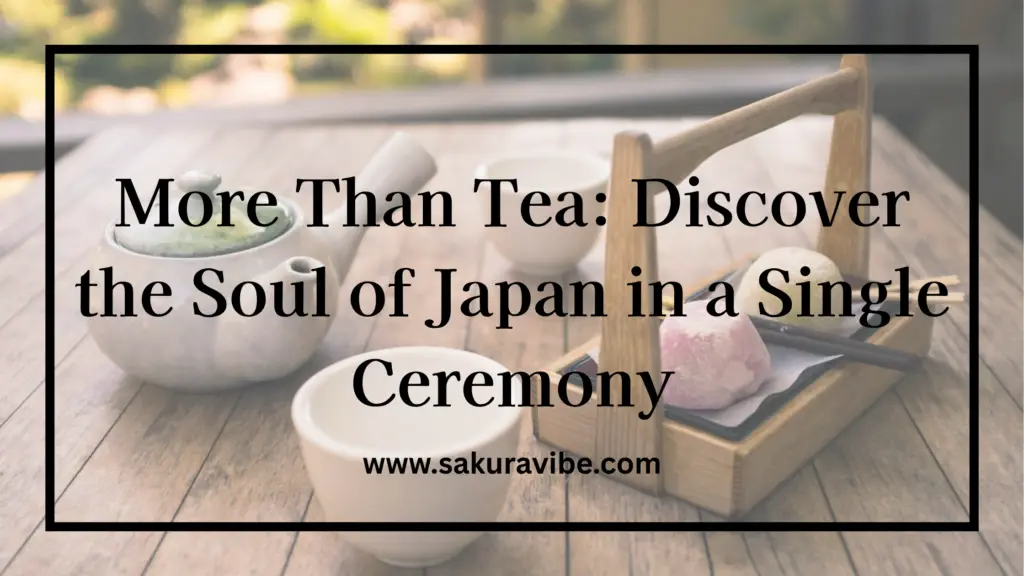
When you see a tea ceremony at first glance, it looks pretty simple. The tea ceremony host gets ready to make green tea they pour in some hot water stir it and then serve the tea in a bowl. They do all of this slowly.
There is no hurry. The Japanese tea ceremony is very quiet and peaceful. The tea ceremony is about the tea.. In Japan the tea ceremony means something much more important. The Japanese tea ceremony is not really about drinking tea at all it is, about how to live your life.
Known as chanoyu or sado, meaning “the way of tea,” this ceremony reflects Japan’s values, history, and philosophy in one carefully choreographed experience.
Every movement, object, and moment has meaning. To understand it is to understand Japan itself.
Table of Contents
ToggleA Tradition Rooted in History
The tea ceremony has been around for a long time. It was affected by Zen Buddhism. Buddhist monks brought tea to Japan. They drank tea to stay awake when they were meditating.
The tea ceremony is about tea. Tea is associated with being disciplined and mindful and having focus. People who do the tea ceremony are very focused on tea, Which means a lot to them.
In the 16 century the tea master Sen no Rikyū changed the tea ceremony into what the tea ceremony is today. The tea master Sen no Rikyū did not like things that were too fancy or expensive.
He liked simple things and he wanted people to be humble and quiet. The tea ceremony is still done in a way because of the tea master Sen no Rikyū and his ideas are still followed now even after hundreds of years have passed.
This long history matters because the ceremony hasn’t changed to impress modern audiences. It has survived because its core message still makes sense: slow down, be present, and respect the moment you’re in.
The Power of Slowness
Life these days is really fast. People are always in a hurry, they do lots of things at the time and they are always staring at screens. The tea ceremony is completely different from that. Everything in the tea ceremony moves at a pace and that is, on purpose.
The person hosting the tea ceremony cleans the utensils carefully. They heat the water without making a sound. They whisk the tea with a lot of attention. The people who are guests just sit there and watch they do not say a word.
This slowness is not wasted time. It makes you pay attention to the tea ceremony. When you do not rush you notice the things, like the sound of water boiling.
You also notice the texture of the bowl you are using.. You can even taste the faint bitterness of the tea. The tea ceremony teaches us that life does not have to be loud to be meaningful. The tea ceremony is a way to learn this.
In Japan, this mindset extends beyond tea. It shows up in how people cook, clean, work, and even apologize. The ceremony becomes a lesson that presence is more valuable than speed.
Harmony, Respect, Purity, and Tranquility
The tea ceremony is based on four ideas: harmony, respect, purity and tranquility. These ideas are very important to the tea ceremony. The tea ceremony has harmony, which is also called wa. It also has respect, which is also called kei. The tea ceremony is pure which is also called sei.. It is calm and peaceful which is also called jaku.
The tea ceremony and its four principles of harmony, respect, purity and tranquility are all, about being calm and respectful.
Harmony is what happens when everything works together in a way. The host, the guests, the space and the things you use. Nothing tries to be the center of attention. You show respect by being quiet bowing and saying thank you for things.
Purity is not about being clean but also, about clearing your mind of things that bother you. When you do the three things you get Tranquility. Harmony and Tranquility go hand in hand with Purity and Respect.
These ideas are not something you think about. People actually do them in life. When someone gets the tea bowl they turn it a bit. This is so they do not drink from the front of the tea bowl.
The front of the tea bowl is considered the beautiful part. By turning the tea bowl the person shows they are humble and that they really appreciate the tea bowl.
Through repeated actions, philosophy becomes habit.
Beauty in Imperfection
The tea ceremony is really something. What I like about is that it is okay with things not being perfect. The bowls they use are often not the same on both sides. They have cracks in them or they are uneven.
The rooms where they have the ceremony are small and simple too. Sometimes the beams in the ceiling are rough and made of wood. The walls are just plain. The tea ceremony is all about the imperfections. They teach us to embrace our flaws.
The Japanese have this cool idea called wabi-sabi. Wabi-sabi is about finding beauty in things that’re not perfect, things that are old and things that are simple. So when it comes to the ceremony it does not try to hide the flaws in things.
The ceremony actually shows off the flaws, in things. That is what makes it special. Wabi-sabi is a part of this ceremony and it is what makes it so unique.
In a world obsessed with perfection and polish, this is a radical idea. The tea ceremony quietly reminds us that flaws are not failures. They are proof of authenticity.
A Conversation Without Words
Tea ceremonies are usually quiet. Guests don’t engage in casual conversation. Silence is not awkward—it’s expected. Communication happens through actions instead of speech.
The way tea is served expresses care. The way it’s received expresses gratitude. The arrangement of flowers or the hanging scroll in the tea room sets the emotional tone.
This wordless exchange reflects Japanese communication more broadly, where meaning is often implied rather than spoken directly. The ceremony becomes a lesson in awareness—reading the room, understanding context, and paying attention to others.
One Moment, One Meeting
The main thing, about the tea ceremony is ichigo ichie, which means “one time, one meeting”. This idea is really important because it reminds the people taking part that this moment is special and it will never happen again in the way.
The people, the season, the weather, and even the mood are unique. The tea ceremony is a moment and ichigo ichie helps people remember that.
The moment is special because it will never happen again. It needs our full attention. We should really focus on the moment because we can not get it back. The moment deserves to be noticed and remembered.
This idea changes how guests experience the ceremony. They are not just drinking tea; they are participating in something fleeting and irreplaceable. It encourages gratitude—not just during the ceremony, but in everyday life.
More Than a Cultural Performance
For people who visit Japan, the tea ceremony might look like a show that’s part of the culture.. For people who do the tea ceremony is more like sitting quietly to think or following rules to be good at it.
The people who are in charge of the tea ceremony called tea masters practice, for a long time to make the movements look easy and simple. The students who want to learn the tea ceremony do the things over and over not to show people how good they are, but to forget about themselves and be humble.
The tea ceremony is something that the students and the tea masters do to make themselves better like a kind of practice to help them be more patient and quiet.
The ceremony strips life down to essentials: water, heat, tea, and human connection. In doing so, it exposes what really matters.
Why It Still Matters Today
The tea ceremony has been around for a long time. It has survived through wars and big changes in the world. The tea ceremony is still here because what it is about is just as important now as it was a long time ago.
The tea ceremony gives us balance when things get much. It helps us to be calm when everything else is crazy and noisy. The tea ceremony is a thing that helps us to slow down and be, at peace.
You do not need to practice the ceremony to learn from the ceremony. The lessons of the ceremony apply anywhere. The ceremony teaches us to slow down, respect people, accept that things are not perfect and value the present moment of the ceremony.
The ceremony is about being present, in the moment and learning from the ceremony.
When you drink a bowl of tea from Japan you can feel the country in that one bowl. Japan is not trying to show off or be loud about it. Instead Japan is being very quiet and thoughtful about the way it does things.
The people of Japan put a lot of thought into that one bowl of tea. They want you to understand Japan and what it is about and they want to show you that in a very calm and quiet way through that bowl of tea, through Japans tea.
And once you understand that, you realize the truth: this ceremony was never about tea. It was always about how to live.